



Sudden Unexpected Death in Epilepsy (SUDEP) is one of the most devastating and least understood outcomes associated with epilepsy. It refers to the sudden, unexpected death of a person with epilepsy when no other cause of death can be identified, and it remains one of the leading causes of epilepsy-related mortality (Nashef et al., 2012). While SUDEP is considered relatively rare overall, it is estimated to affect approximately 1 in 1,000 adults with epilepsy each year, with risk increasing significantly among people with uncontrolled generalized tonic-clonic seizures (U.S. Centers for Disease Control and Prevention, 2024).
While advances in monitoring, treatment, and seizure management continue to improve outcomes for many people living with epilepsy, studies show that many patients and families still lack critical information about SUDEP, often learning about it only after a loss has occurred. (Watkins et al., 2024). Professional guidelines increasingly recommend discussing SUDEP risk with patients and families, yet these conversations do not happen consistently in routine clinical practice.
In a recent webinar hosted by Empatica, Rosalind Picard, ScD, Professor at the MIT Media Lab, Empatica Co-Founder, and Chief Scientist, brought together neurologists and epileptologists, and a parent advocate to discuss a paper newly published in Neurology titled “SUDEP Awareness and Effect on Parental Trauma, Grief, and Coping After the Death of a Child”.
The webinar featured:
- Dr. Itay Tokatly Latzer, pediatric neurologist, epileptologist, Director of the Neurostimulation Service at Dana-Dwek Children's Hospital, Tel Aviv Medical Center, Senior Lecturer at Tel Aviv University, and lead author of the study. His research focuses on epilepsy, inherited metabolic epilepsies, SUDEP, family counseling, and prevention strategies.
- Dr. Phillip L. Pearl, Director of Epilepsy and Clinical Neurophysiology at Boston Children's Hospital, William G. Lennox Chair and Professor of Neurology at Harvard Medical School, internationally recognized for his work in epilepsy and inherited metabolic disorders.
- Tom White, father of Quin White, who passed away from SUDEP in November 2024. Tom and his wife, Heather, have since become advocates for SUDEP awareness and have established the Quin White Scholarship Fund to honor their son's legacy.
The discussion combined lived experience, clinical research, and emerging technology to explore a central question:
What happens when families are not informed about SUDEP early enough, and what can be done to change that?
A family’s lived experience
Tom White shared a deeply personal account of his family's experience with epilepsy and the loss of his son, Quin.
Tom described Quin as an active, driven teenager who loved sports, ran cross country and track, played soccer, and dreamed of becoming a firefighter. Like many families navigating epilepsy, the Whites were actively engaged in care, worked with respected specialists, and closely followed treatment recommendations.
Through photographs and memories from Quin's senior year, his 18th birthday, and the final weeks before his death, Tom painted a picture of a young man whose life was far larger than his diagnosis. Throughout the presentation, one message remained clear: epilepsy was part of Quin's life, but it did not define who he was.

The emotional weight of Tom's story highlighted a reality shared by many bereaved families. Even when receiving excellent medical care, parents often feel unprepared for the possibility of SUDEP. For many, grief becomes intertwined with a painful question:
"Why didn't we know?"
Understanding the research
Following Tom’s presentation, Dr. Latzer presented findings from the Neurology study examining how SUDEP awareness influences parental grief after loss.
The study explored the experiences of parents whose children died from SUDEP and examined how prior awareness, or lack of awareness, shaped their emotional response afterward.
One of the most important findings was that parents who had not been informed about SUDEP before their child’s death often experienced more intense feelings of shock, anger, guilt, and medical distrust.
Many families reported feeling excluded from conversations that could have helped them make more informed decisions about risk reduction, nighttime supervision, seizure monitoring, or medication adherence.
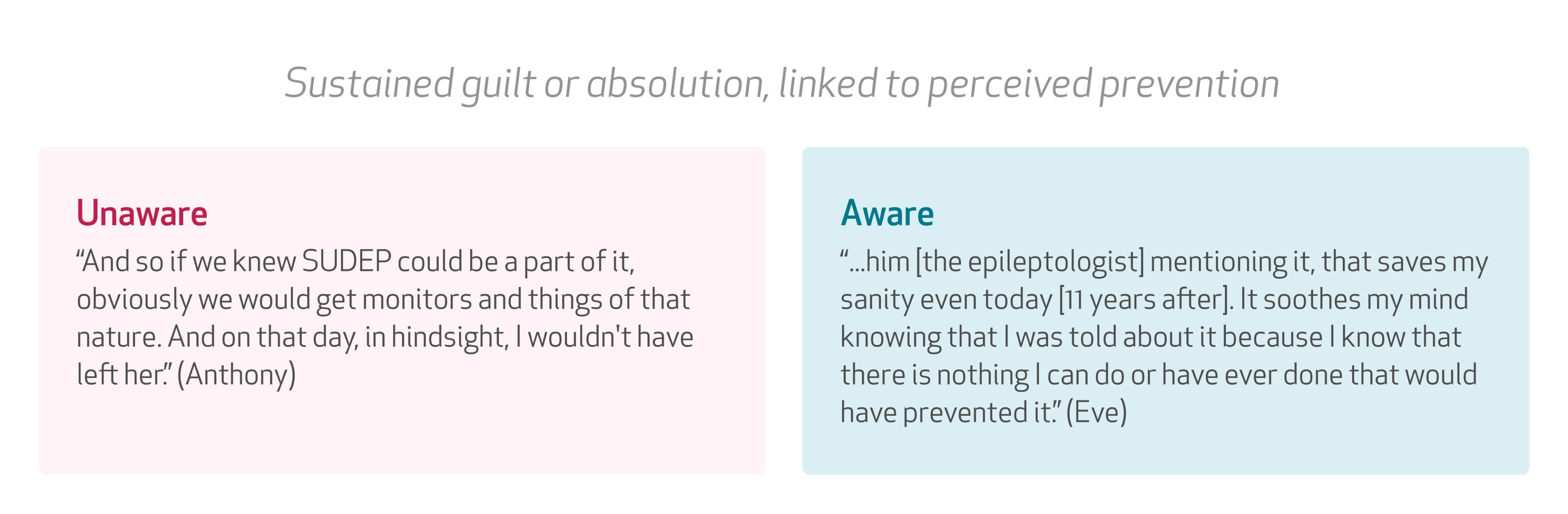
The research highlights a longstanding challenge within epilepsy care. Some clinicians worry that discussing SUDEP may increase anxiety or overwhelm patients and caregivers. However, the study suggests that avoiding these conversations may have unintended consequences, leaving families feeling unprepared and undermining trust after a loss.
The research argues that transparent, compassionate communication is not only essential for informed decision-making but may also influence how families process grief in the aftermath of tragedy.
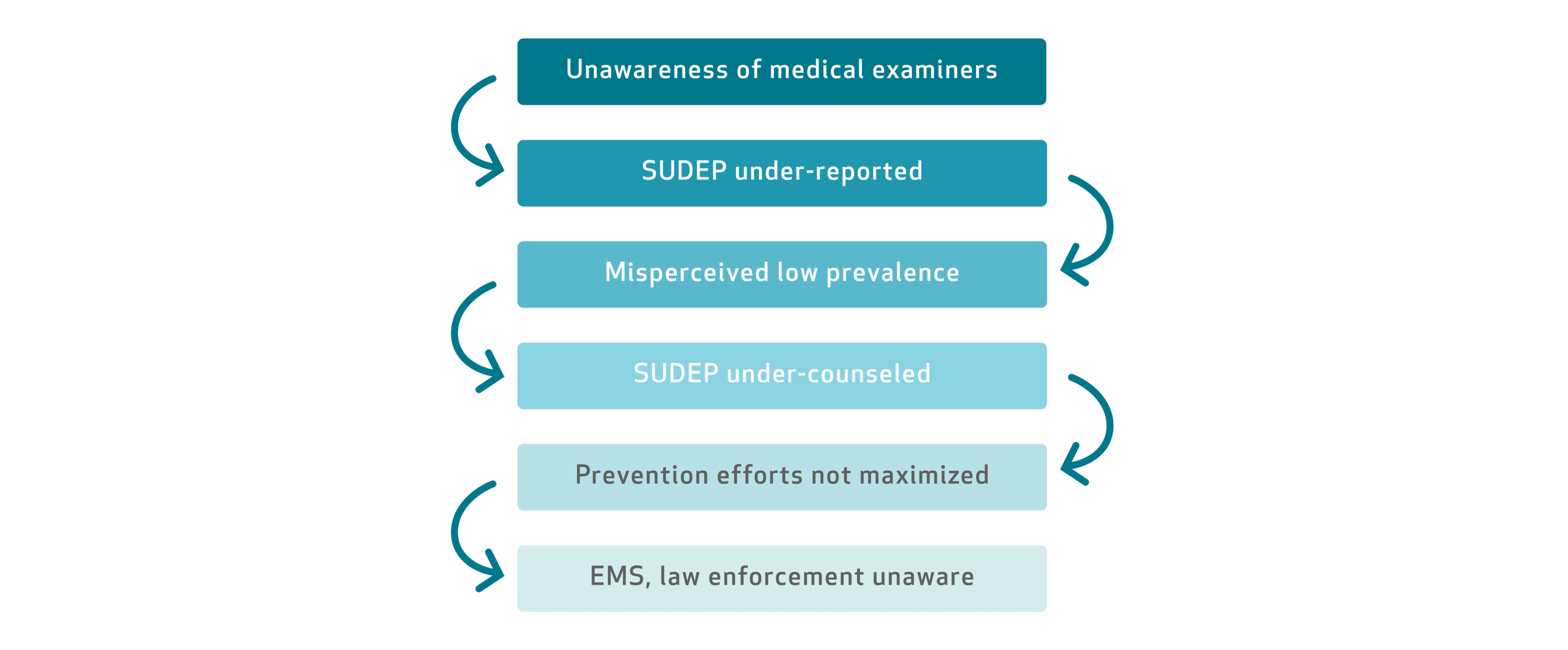
One of the most thought-provoking concepts discussed during the webinar was what Dr. Latzer described as a "snowball effect" of SUDEP unawareness across multiple disciplines.
The cycle often begins with limited awareness among medical examiners and death investigators. When SUDEP is not recognized as a potential cause of death, cases may be misclassified or omitted from official reporting. As a result, SUDEP becomes under-reported. When cases are under-reported, prevalence appears lower than it truly is. This can create the perception that SUDEP is exceedingly rare, reducing the urgency for education and discussion among healthcare providers, emergency responders, law enforcement personnel, and the broader epilepsy community. As a result, fewer families have the opportunity to learn about SUDEP and the steps that may help better understand and manage risk.
Why SUDEP conversations are often delayed
Despite increasing awareness in the epilepsy community, SUDEP discussions still do not happen consistently.
Several barriers contribute to this:
Fear of causing distress
Clinicians may hesitate to introduce SUDEP early because they worry the conversation will create unnecessary anxiety for newly diagnosed patients and families.
Time constraints in clinical practice
Epilepsy appointments are often packed with discussions about medication changes, seizure frequency, side effects, testing, safety precautions, and treatment planning. Important long-term risk conversations may be postponed.
Uncertainty about timing
There is no universal standard for when SUDEP should be discussed. Some providers introduce it at the time of diagnosis, while others wait until risk factors become more severe.
Lack of training
Not all clinicians receive formal guidance on how to communicate SUDEP risk effectively and compassionately.
The speakers emphasized that while these concerns are understandable, delaying conversations indefinitely may create greater challenges later.
SUDEP risk factors
Dr. Phillip L. Pearl, Director, discussed the practical implications of the research for clinical care. Known SUDEP risk factors include:
- Frequent generalized tonic-clonic seizures
- Living alone
- Prolonged peri-ictal apnea
- Nocturnal seizures
The importance of modifiable risk factors
Research has shown that several factors may help reduce SUDEP risk, including:
- Adherence to treatment
- Avoid alcohol and substance abuse
- Avoid sleep deprivation
- Assistance overnight
- Treat sleep apnea when appropriate
- Monitoring devices, such as EpiMonitor
- Lattice pillow
- Innovative devices to arouse/move the patient
The goal is not to create panic, but to help families make informed choices.
Technology and the future of epilepsy monitoring
The webinar also explored how advances in AI and wearable technology may support earlier intervention and improve safety for people living with epilepsy.
Dr. Latzer demonstrated emerging applications of artificial intelligence in seizure monitoring and SUDEP counseling, highlighting how new tools may assist both clinicians and caregivers.
Over the last decade, wearable devices have evolved from simple activity trackers into clinically validated tools capable of detecting physiologic changes associated with seizures.
These technologies are increasingly being integrated into epilepsy care to help:
- Detect generalized tonic-clonic seizures
- Alert caregivers in real time
- Monitor physiologic signals continuously
- Generate longitudinal data for clinicians
- Improve visibility into nighttime events
While no technology can eliminate SUDEP risk entirely, improved monitoring may provide families with additional layers of support and awareness. As Dr. Pearl emphasized, these technologies can also help facilitate difficult conversations by giving clinicians and families tangible strategies to discuss alongside SUDEP risk.
Building a more open culture around SUDEP
Improving SUDEP awareness requires collaboration between clinicians, researchers, advocacy organizations, caregivers, technology developers, and people living with epilepsy. Several key themes emerged from the discussion:
Normalize SUDEP conversations
SUDEP should become a standard part of epilepsy education rather than an avoided topic.
Tailor communication to the individual
Risk discussions should consider age, seizure type, epilepsy severity, caregiver readiness, and emotional context.
Support families emotionally
Conversations about risk must be delivered with empathy, clarity, and ongoing support.
Continue advancing research
More research is needed to better understand SUDEP mechanisms, risk prediction, and prevention strategies.
Expand access to monitoring technologies
Seizure monitoring tools may play an increasingly important role in supporting families and clinicians. However, many families still face barriers to accessing these technologies. Broader insurance coverage and reimbursement pathways will be important to ensure these tools are available to everyone who could benefit from them.
Moving forward
The discussion served as both a scientific discussion and a reminder of the human realities behind epilepsy research.
Tom White’s story put a face to the statistics. The research presented by Dr. Latzer demonstrated how communication shapes grief after loss. And the clinical perspective shared by Dr. Pearl highlighted the responsibility healthcare providers have to engage families openly and compassionately.
The central message was clear:
Awareness matters. Communication matters. And informed families are better equipped to participate in care, advocate for safety, and navigate the challenges of epilepsy together.
As the epilepsy field continues to evolve through research, AI, and wearable monitoring technologies, one goal remains constant: helping families feel more informed, more supported, and less alone.