
Advancing objective Parkinson’s monitoring in clinical practice

Empatica
May 11, 2026• 13 min read


Parkinson’s disease care still relies heavily on episodic clinic visits, patient recall, and short in-office assessments. Yet motor fluctuations, nocturnal symptoms, and treatment response often unfold over days, not minutes. For clinicians managing increasingly complex Parkinson’s populations, this mismatch creates a familiar problem: changes or trends in symptom burden can be missed between appointments.
In a recent webinar hosted by Empatica, Professor K. Ray Chaudhuri, Director of Research and Clinical Trials at King’s College Hospital London and a global leader in Parkinson’s disease research, outlined how multi-day remote monitoring can complement standard neurological assessment by helping clinicians identify symptom patterns, quantify fluctuations, and evaluate treatment response in real-world settings.
Professor Chaudhuri is internationally recognized for reshaping the understanding and management of non-motor symptoms in Parkinson’s disease. He was also identified in a 2024 independent Frontiers review as the most published researcher globally in non-motor Parkinson’s since 2013. His honors include the Jay Van Andel Award for Outstanding Achievement in Parkinson’s Research, the NIHR (National Institute for Health and Care Research)/Royal College of Physicians Award for outstanding research leadership, and the UK NHS Gold Merit Award for excellence in research and clinical service.
Why objective monitoring matters in Parkinson’s disease
Parkinson’s disease is dynamic. Bradykinesia, tremor, dyskinesia, gait impairment, nocturnal akinesia, and early-morning “off” periods can fluctuate substantially across the day and night. Brief clinic visits capture only a narrow snapshot of that experience.
This is one reason objective monitoring has gained traction for treating chronic conditions. However, until now, parkinsons motor symptoms could not be objectively measured by validated devices.
As Professor Chaudhuri emphasized, many wearables can record activity, but few have been specifically developed and validated to quantify Parkinsonian motor features in a way that can inform clinical decision-making.
From movement tracking to clinically actionable Parkinson’s measures
Parkinson’s KinetiGraph (PKG) is a Parkinson’s-specific monitoring platform with a substantial evidence base.
Professor Chaudhuri highlighted several measures that are particularly relevant in practice:
- Bradykinesia, dyskinesia, and fluctuation dyskinesia scores, which can help characterize motor fluctuations over time
- Percentage time with tremor
- Percentage time immobile
- Sleep-related measures, including a derived sleep score
- Gait-related measures
Importantly, these outputs are generated from multi-day home monitoring rather than a single in-clinic observation. That longitudinal view can help clinicians distinguish persistent patterns from isolated findings.

The clinical advantage of longitudinal home monitoring
One of the most compelling points from the discussion was the difference between seeing a patient for 15 or 30 minutes in the clinic and reviewing several days of continuous real-world data.
According to Professor Chaudhuri, this extended recording period can reveal patients who are far more impaired at home than they appear during an office visit. In one example discussed during the webinar, profound bradykinesia across a seven-day recording helped identify a patient in urgent need of therapeutic escalation. In another, the PKG data helped differentiate peak-dose dyskinesia from more continuous dyskinetic patterns, with direct implications for treatment planning.
For healthcare professionals, this is the key operational shift: objective monitoring does not merely confirm that symptoms exist; it can help determine when they occur, how often, and their relationship to medication timing.
That level of resolution may support more informed decisions around:
- levodopa optimization
- adjunctive therapy selection
- advanced therapy referral
- nocturnal symptom management
- post-intervention follow-up
Moving beyond daytime symptoms: the value of overnight monitoring
Professor Chaudhuri also devoted attention to nighttime impairment, an area that remains underdetected in routine practice despite its impact on function and quality of life.
He described how overnight immobility and sleep-related PKG outputs may help identify motor intrusion during sleep, including patterns consistent with nocturnal akinesia, frequent awakenings, and early-morning “off” periods. In his view, this is clinically meaningful because these symptoms are often missed unless clinicians have objective data that prompt questions.
This is especially relevant for patients who report:
- difficulty turning in bed
- painful dystonia or cramping overnight or on waking
- nonrestorative sleep
- fragmented sleep with frequent awakenings
- worsening mobility in the early morning hours
The discussion highlighted emerging work linking PKG-derived sleep measures with sleep quality and uninterrupted sleep duration. Whilst polysomnography only looks at sleep architecture, the PKG looks specifically at motor symptoms that disrupt sleep in real-world settings.
A tool for precision medicine, not just data tracking
Another major takeaway was the positioning of objective monitoring within precision neurology.
Professor Chaudhuri described PKG as a way to guide individualized treatment adjustments using quantitative, longitudinal data. Rather than relying solely on patient recall or broad categorical descriptors such as “better” or “worse,” clinicians can review whether bradykinesia, tremor burden, dyskinesia, fluctuation severity, or nighttime immobility changed after an intervention.
This is particularly valuable when evaluating response to:
- medication adjustments
- dopamine agonists or COMT inhibitors
- continuous infusion strategies
- changes intended to address nocturnal symptoms
In the webinar, Professor Chaudhuri shared examples in which objective measures tracked clinically meaningful change after treatment modification, including major reductions in tremor burden and improvements in early-morning “off” patterns.
For specialists and multidisciplinary teams, that kind of signal can help support treatment optimization and reinforce patient confidence that a change is having a measurable effect.
Does wearable monitoring add burden to the clinic?
This question came up directly during the Q&A and is one that many clinicians will recognize. New technology must fit clinical workflows, not complicate them.
Professor Chaudhuri’s perspective was that objective monitoring may add some time to interpretation and discussion, but that this should be weighed against the improvement in care quality and the reduction in uncertainty. He argued that reviewing validated objective data is part of delivering better care, not an administrative add-on.
He also pointed out a practical advantage: when clinicians begin a visit with several days of home data already available, they may spend less time reconstructing symptom history from memory alone. That can reduce the “anthropological digging,” as Chase Babcock, General Manager of Clinical Care at Empatica, described during the discussion, that often consumes valuable clinic time.
In the broader care pathway, Prof. K. Chaudhuri also referenced published evidence suggesting that appropriate use of objective monitoring may contribute to fewer hospital visits, more targeted medication adjustments, and lower overall healthcare resource use.
In a 2022 analysis comparing PKG-guided care to standard care (modeled across Hoehn and Yahr stages 1–5), this translated into an estimated cost saving of approximately £14,000 per patient, driven by reductions in hospital visits, medication costs, and improvements in quality of life linked to more effective dopamine replacement therapy.

Patient acceptance may be stronger than expected
Clinician concerns about adherence and usability are understandable, particularly in older adults or patients with complex comorbidities. However, Professor Chaudhuri noted that many patients respond positively when the purpose of monitoring is clearly explained.
In his experience, patients appreciate that their condition is being assessed objectively and taken seriously. This is especially important when symptoms fluctuate, occur outside clinic hours, or are difficult to convey verbally.
Patient adherence to Parkinson’s wearable monitoring is influenced not only by hardware design, but also by whether the patient sees the clinical relevance. When patients understand that the device may help validate symptoms that occur at home and guide more precise treatment, uptake may be stronger than clinicians expect.
Applicability across disease stages, including older adults
The webinar also addressed whether Parkinson’s wearables are mainly useful in earlier-stage patients or whether they can add value in geriatric populations as well.
Professor Chaudhuri’s view was that these measures remain relevant across age groups. While dyskinesia burden may differ in older patients, bradykinesia and nocturnal impairment often remain highly relevant and, in some cases, may be even more important. He suggested that objective monitoring can be particularly helpful when combined with broader geriatric assessment tools.
For clinicians managing older patients with Parkinson’s disease, this supports a more inclusive view of wearable monitoring: not just as a specialist tool for selected advanced cases, but as a potentially useful component of broader longitudinal care.
Where Empatica adds value
The webinar highlighted how Empatica has integrated PKG capabilities into its broader clinical care ecosystem following the acquisition of PKG Health.
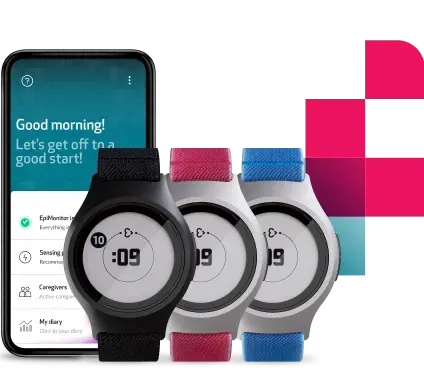
At the core of this is a Parkinson’s monitoring workflow built around EmbraceMini, a lightweight wearable connected to a patient smartphone app and clinician portal, enabling continuous, secure data flow from device to cloud, with PKG reports readily available for clinician review. The platform also supports features such as medication reminders aligned to prescribed treatment schedules.
To support this integration, Empatica conducted a validation study confirming that PKG outputs remain consistent within the new system, demonstrating equivalent performance.

The bigger picture: toward scalable, real-world Parkinson’s care
The webinar closed on a theme increasingly central to neurology: connecting specialist expertise with scalable, real-world monitoring.
As Parkinson’s prevalence rises alongside constrained specialist capacity and growing expectations for personalized care, objective remote monitoring offers a way to bridge the gap between what patients experience at home and what clinicians can observe in the clinic.
For healthcare professionals, the question is no longer whether wearables can capture movement, but whether the data is validated, interpretable, and actionable within the context of Parkinson’s care. As Prof. Chaudhuri emphasized, when these conditions are met, objective monitoring can play a meaningful role in routine practice; from identifying motor fluctuations and nighttime impairment to assessing therapeutic response and enabling more precise treatment decisions.
For clinicians considering digital monitoring, the webinar outlined a practical approach:
- Prioritize disease-specific validation over generic tracking
- Use longitudinal home data to complement clinical assessment
- Pay close attention to nighttime symptoms and early-morning “off” periods
- Focus on data that informs treatment decisions rather than simply increasing data volume
Ultimately, in Parkinson’s disease, many of the most impactful symptoms occur outside the clinic. Multi-day, objective monitoring helps bring that reality into clearer view, supporting more informed and responsive care.
