
Back to school with wearables during COVID-19

Empatica
Sep 18, 2020• 8 min read


The start of the 2020/21 school year has been unlike any other: mask usage, desk arrangements, testing, and more debates, have resulted in a wave of uneasiness across the globe. From nurseries to universities, institutions and government bodies are facing the challenge of keeping COVID-19 at bay, while keeping students and teachers safe.
The WHO advises that “sick students, teachers, and other staff should not come to school“ [1], but that is easier said than done given the asymptomatic spread of COVID-19, which the CDC estimates to be close to 40% [2]. When and if someone displays symptoms might be too late.
In the meantime, the number of COVID-19 cases in children in the U.S. is on the rise. In a report issued in late August by the American Academy of Pediatrics and the Children's Hospital Association, child cases increased by 21%, making them 1 in 10 known cases in the country [3].
The impact of COVID-19 school closures
COVID-19 school closures could cost the U.S. Economy $14 trillion, according to a report by economists Eric Hanushek, senior fellow at the Hoover Institution of Stanford University, and Ludger Woessmann, professor at the University of Munich [4]. This translates into a 1.5% loss in GDP. On the other hand, the threat of COVID-19 outbreaks in schools goes beyond its impact on livelihood and the smooth running of schools, since children and teens may also be living with parents who are immunocompromised, and are at higher risk of becoming seriously ill in case of contacting SARS-CoV-2 [5].
The burden is global. A recent U.N. report states that the “COVID-19 pandemic has created the largest disruption of education systems in history, affecting nearly 1.6 billion learners in more than 190 countries and all continents,” while school closures have affected 94% of students globally. [6]
Though this has, like in other industries, accelerated the adoption of new technologies to facilitate teaching, the benefits of in-person education, especially for younger generations, have been proven time and time again.
The latest report by the World Bank [7] reiterates this. If we don’t ensure the safe reopening of schools:
- COVID-19 could result in a loss of 0.6 years of schooling adjusted for quality, bringing down the effective years of basic schooling that children achieve during their schooling life from 7.9 years to 7.3 years
- In the absence of effective policy action, each student from today’s cohort in primary and secondary school could face, on average, a reduction of $872 in yearly earnings. This is approximately equivalent to $16,000 over a student’s work life at present value
- While school closures could lead to falling test scores on average, in the intermediate scenario there may be as much as a 25% increase (from 40% to 50%) in the share of lower secondary-aged children who are below the minimum level of proficiency.
Testing has its limits
The CDC has issued guidelines on how to ensure the safe running of schools [8]. These include:
- Students having lunch at their desks instead of the cafeteria
- Closing playgrounds and communal places
- Having desks spaced six feet apart
Despite the increased awareness and stringent guidelines, several schools have already opened and were forced to shut again, after noticing outbreaks [9] [10].
Though RT-PCR tests still remain the gold standard in identifying the presence of infection, these have a limited capacity (the UK is currently facing a backlog of nearly 200,000 tests that need to be processed [11], and swabs do not provide ongoing insight into someone’s health.
According to the CDC, the likelihood of a false negative varies greatly depending on the day since the initial infection, and could be as high as 60%. [12] This means that anyone infected with COVID-19 might test negative one day and be ill and infectious the next, which is also why many countries now impose a specific number of days in quarantine for visitors flying in from countries with a high number of cases, even if their initial swab is negative.
Many COVID-19 testing sites still do not test children, especially those younger than 6. Limited testing means that schools will find it challenging to keep the virus at bay through regular test and trace methods. However, where children in the US were tested, they made up between 4%-14.3% of total state tests, and between 3%-17.3% of children tested were positive [13].
How wearables can help
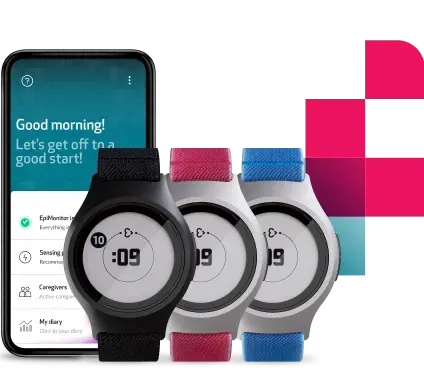
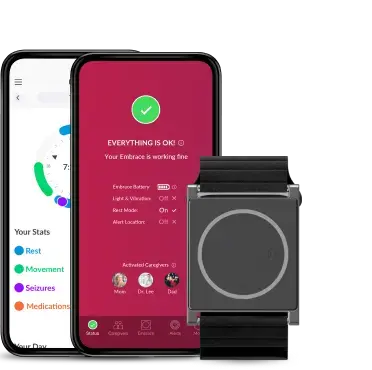
Wearable technology can provide ongoing monitoring of key vitals, which can, in turn, provide a useful indication of whether someone’s health is deteriorating, even if they have no symptoms. Advanced health smartwatches can now easily collect data such as pulse rate, respiratory rate and ambient temperature all day long, which can then be examined daily using machine learning and, with the help of digital software like an app, can let the user know whether they might be developing an infection.
Imagine a teenager who wakes up, checks her phone, and gets a warning from her app that she might be at high risk of developing a respiratory infection. Instead of having breakfast with her parents, going to school by bus, and sitting in a packed classroom all day, she would self-isolate in her room and book herself a test, keeping dozens of others she would under other circumstances come in contact with safe.
Maintaining healthy operations of schools and universities while ensuring the safety of students, staff, and their families, is a challenge that will not be resolved easily. Providers that offer wearable monitoring and detection must ensure not only accuracy in the data collected (which is highly dependent on the device itself), but also the privacy of everyone involved.
And intermittent closures may not be completely avoided, but early detection using wearables and AI can help in reducing them without relying on scarce testing resources, or waiting for symptoms to manifest, thus helping schools offer the best possible education to students, peace of mind to their parents, and safety to all involved.
Sources
1. https://www.who.int/docs/default-source/coronaviruse/key-messages-and-actions-for-covid-19-prevention-and-control-in-schools-march-2020.pdf?sfvrsn=baf81d524&gclid=EAIaIQobChMItrvlKTt6wIVBfhRCh3CjwmyEAAYASAAEgKVgfDBwE 2. https://www.cdc.gov/coronavirus/2019-ncov/hcp/planning-scenarios.html 3. https://services.aap.org/en/pages/2019-novel-coronavirus-covid-19-infections/children-and-covid-19-state-level-data-report/ 4. http://www.oecd.org/education/The-economic-impacts-of-coronavirus-covid-19-learning-losses.pdf 5. https://www.cdc.gov/coronavirus/2019-ncov/need-extra-precautions/immunocompromised.html 6. https://www.un.org/development/desa/dspd/wp-content/uploads/sites/22/2020/08/sgpolicybriefcovid-19andeducationaugust2020.pdf
7. http://pubdocs.worldbank.org/en/798061592482682799/covid-and-education-June17-r6.pdf
8. https://www.cdc.gov/coronavirus/2019-ncov/community/schools-childcare/schools.html
9. https://edition.cnn.com/2020/08/09/us/north-paulding-high-school-covid-19-cases/index.html
10. https://www.wsj.com/articles/schools-are-reopening-then-quickly-closing-due-to-coronavirus-outbreaks-11597700886
11. https://www.theguardian.com/world/2020/sep/13/covid-tests-sent-to-italy-and-germany-as-uk-labs-are-overwhelmed
12. http://dx.doi.org/10.7326/M20-1495
13. https://services.aap.org/en/pages/2019-novel-coronavirus-covid-19-infections/children-and-covid-19-state-level-data-report/
We do not guarantee that EpiMonitor will detect every single seizure and deliver alerts accordingly. It is not meant to substitute your current seizure monitoring practices, but rather to serve as a supplement in expediting first-response time.