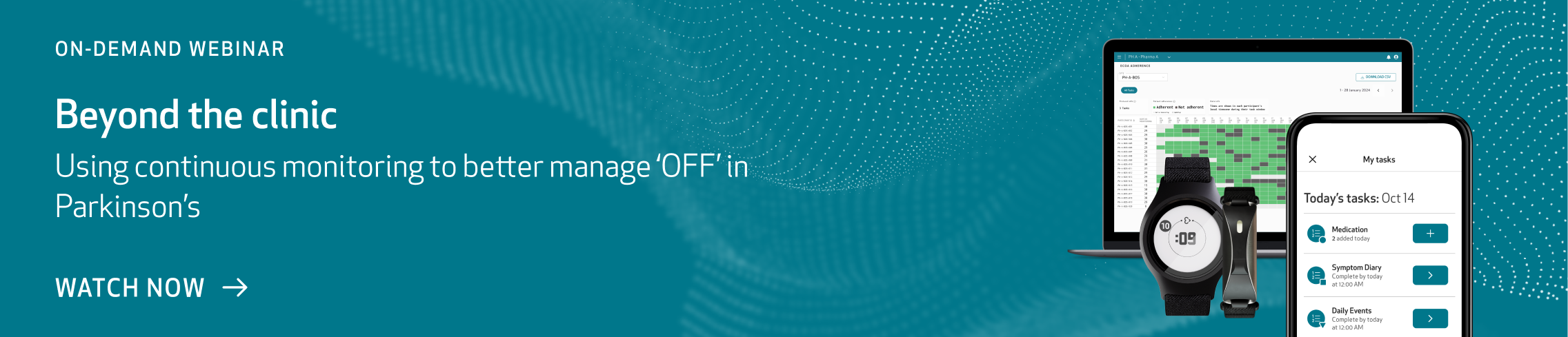



For people living with Parkinson's disease, some of the most disabling moments of the day happen far from the clinic. A patient may walk into their neurologist's office looking steady and articulate, only to spend hours at home each day struggling to get out of a chair, turn over in bed, or button a shirt. These episodes are known as "OFF" periods, times when the benefit of medication wears off between doses, and motor and non-motor symptoms resurface (Parkinson’s Foundation, n.d.). OFF periods are not a late-stage complication; the DEEP study, a multicenter survey of more than 600 people with Parkinson's, found that wearing-off can already be present within the first two-and-a-half years of diagnosis, and in roughly half of patients by five years. Left undetected, they quietly erode quality of life and can point clinicians toward the wrong treatment decisions simply because the data needed to see them clearly was never captured.
Patients often struggle to describe fluctuations they can feel but cannot name, and clinicians are left trying to reconstruct a week's worth of symptoms from memory alone. In a recent installment of Empatica's webinar series, Professor Francesca Morgante, MD, PhD, discussed this challenge, the limitations of traditional monitoring methods, and how wearable technologies are helping clinicians move beyond the clinic to gain a more complete picture of patients' daily experiences. Compounding these challenges is that a standard 15-minute consultation, however well-run, is a snapshot, not the full picture. Part of the reason those appointments are so short and hard to come by in the first place is supply: a 2013 study supported by the American Academy of Neurology found an 11% shortage of neurologists in the US at the time, projected to grow to 19% by 2025 (Dall et al., 2013)
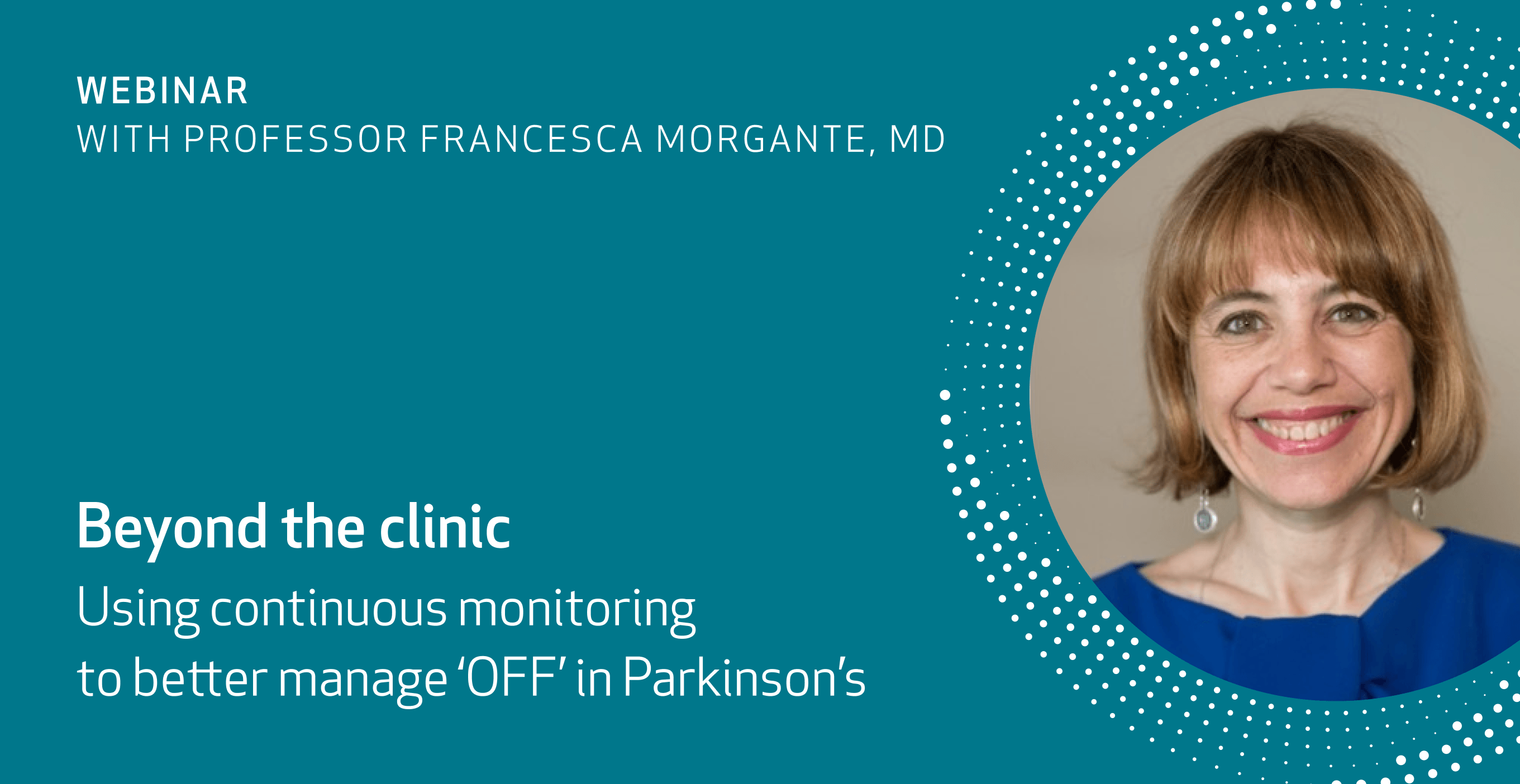
The webinar featured:
- Professor Francesca Morgante, MD, PhD, Professor of Neurology and Eleanor Peel Chair for the Study of Ageing, and Head of the Neuromodulation and Motor Control Section at City, St George's, University of London. Internationally recognized neurologist and movement disorder specialist whose work focuses on Parkinson's disease, tremor, dystonia, and advanced therapies. Throughout her career, she has published more than 200 peer-reviewed papers and numerous book chapters on movement disorders, helping shape how clinicians assess and manage Parkinson's disease.
- Chase Babcock, MHA, General Manager of Clinical Care at Empatica, who hosted the discussion.
Two kinds of symptoms, one diagnostic challenge
Prof. Morgante opened by reframing how clinicians should think about the Parkinson's symptom picture. Some symptoms fluctuate throughout the day, including tremor, rigidity (often reported by patients simply as pain), reduced dexterity, gait difficulty, and trouble turning in bed, alongside non-motor symptoms like anxiety, sleep disturbance, and slowed thinking. Others, such as psychiatric symptoms, non-fluctuating pain, and gastrointestinal issues, do not fluctuate but still shape treatment decisions because they influence how medication should be dosed. Anxiety deserves particular attention: it can amplify a patient's perception of their own tremor or stiffness, making an already complex symptom profile even harder to untangle.
Adding to this is the "wearing-off" phenomenon itself, which clinicians classify in several distinct forms: a shortening window of benefit after each levodopa dose, delayed "on" response (often caused by food interactions and gastric emptying in the afternoon), outright dose failure, and nocturnal or early-morning akinesia that leaves patients unable to turn in bed or walk when they wake (Olanow et al., 2021; W C Koller, 2000). As Prof. Morgante explained, these patterns trace back to the progressive loss of the brain's capacity to store dopamine, leaving patients increasingly dependent on fluctuating blood levels of the drug rather than on a steady reservoir in the brain. This highlights a clear need for objective tools that can continuously monitor symptoms in real-world settings.
The communication gap between patients and clinicians
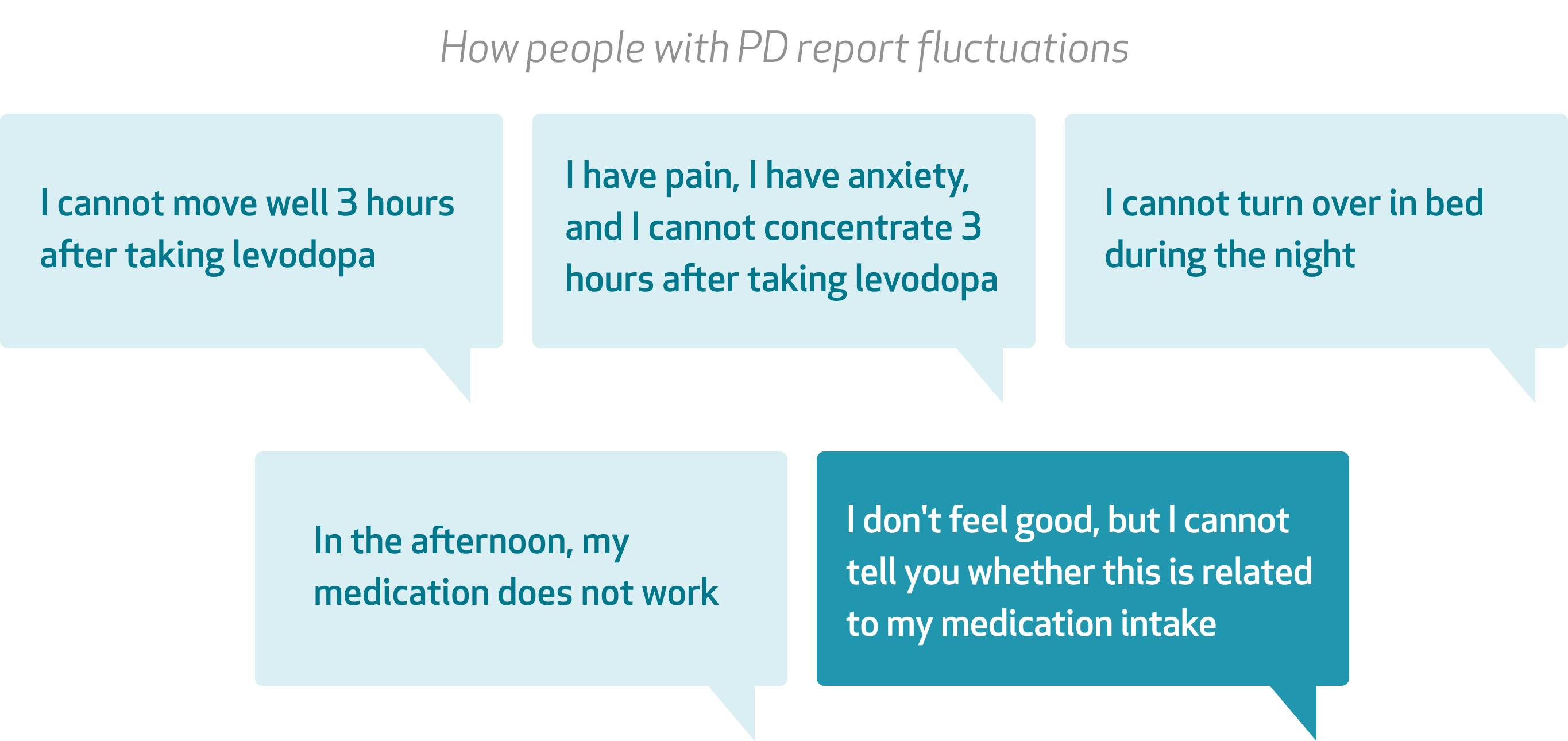
One of the more striking parts of the discussion was Prof. Morgante's walkthrough of how patients actually describe their ‘OFF’ periods, and how differently that language lands for a clinician working within a short appointment. Some patients can pinpoint that they "can't move well four to five hours after levodopa," which is straightforward to act on. Others simply say, "my medication doesn't work" or "I don't feel good," without being able to tie that feeling to a time of day or a dose. That kind of report, however common, is far harder to translate into a treatment change, and untangling it typically requires more time than most healthcare systems can offer.
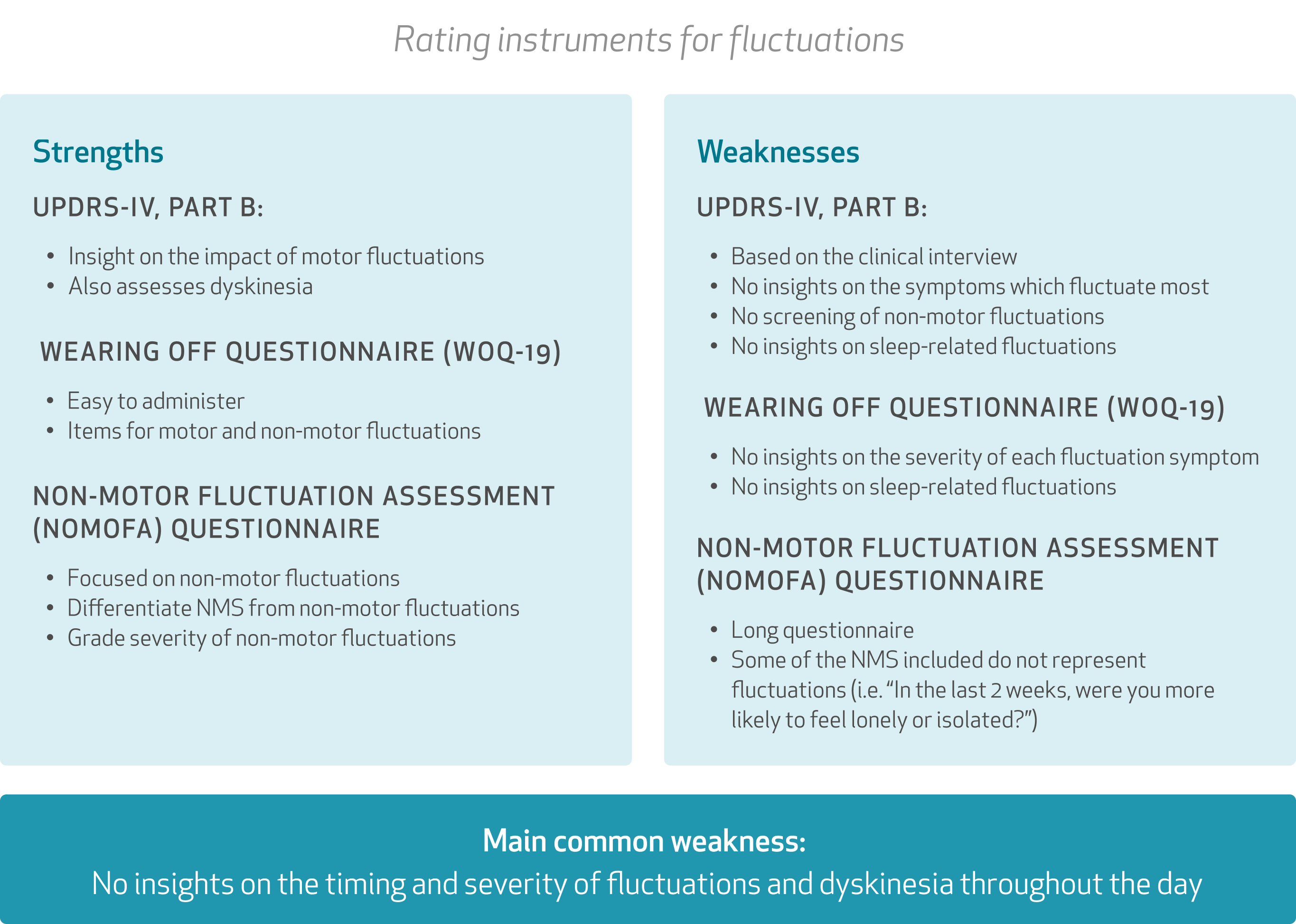
This mismatch between how symptoms are experienced and how they are reported is, in Prof. Morgante's view, at the heart of the diagnostic problem. Existing tools only partly close the gap. Clinical interviews are quick but subjective. The wearing-off questionnaire (WOQ) is easy to administer but says little about severity or timing. The Hauser diary captures symptoms every 30 minutes, but that level of self-monitoring is burdensome and can distort a patient's normal routine. The Non-motor Fluctuation Assessment (NoMoFA) is thorough but long, and patients often struggle to complete it meaningfully. The stakes of getting this right are not trivial: that same DEEP study found that the presence of wearing-off, identified by questionnaire, was associated with a meaningful worsening of a patient’s quality of life (Stocchi et al., 2014).
From subjective reports to objective, continuous data
This is the gap that wearable, continuous monitoring technology is increasingly filling. Continuous monitoring refers to the use of wearable sensors and digital health technologies to collect objective data about a patient's movement and activity throughout the day.
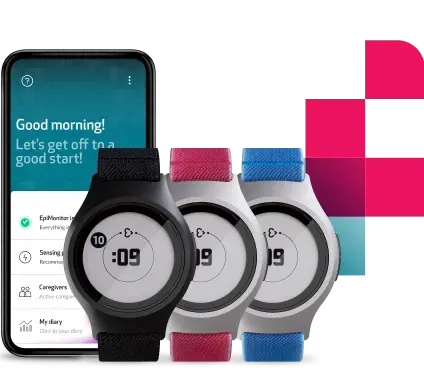
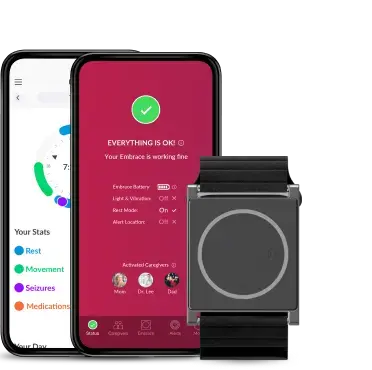
Prof. Morgante pointed to a 2016 review, co-authored by movement disorder specialist Alberto Espay for the International Parkinson's Disease and Movement Disorder Society's Technology Committee, that envisioned a future in which patients would be tracked at home using wearable devices (Espay et al., 2016). A decade later, much of that vision has become clinical reality, particularly through the Parkinson's KinetiGraph (PKG) algorithm, now embedded in Empatica's EmbracePlus and EmbraceMini devices. Worn for at least five days, and increasingly for months at a time, PKG provides objective measurement of bradykinesia, tremor, dyskinesia, physical activity levels, and sleep patterns over the course of ordinary daily life.
The clinical evidence behind this shift is substantial. In a study led by Professor Horne's team in Tasmania, Australia, 103 patients underwent PKG monitoring, and nearly 80% had bradykinesia or dyskinesia scores outside the target range, prompting changes in oral therapy, consideration of device-aided therapies, or, for a small number, a decision that treatment was contraindicated (Farzanehfar et al., 2018). Prof. Morgante also cited a separate multicenter UK audit of PKG use, in which she reported that treatment plans were changed in 92% of patients, most commonly through adjustments to dopaminergic medication and advice on sleep and bowel management (Dominey et al., 2020), a meaningful shift in practice within a system where consultation time is famously tight.
What the data reveals in practice
Prof. Morgante shared several real patient examples that showed just how much a short conversation can miss. A patient's bradykinesia readings never reached the threshold for good mobility, revealing a consistently suboptimal response to levodopa rather than the fluctuating pattern that might be expected, with roughly eight hours of severe OFF time per day. That finding pointed toward escalating to an infusion therapy that bypasses gastrointestinal absorption altogether; after the change, the same patient's daily step count rose from around 75 steps to 400.
Other cases were just as telling. For a 61-year-old patient with six years of disease who reported what he believed was tremor, PKG data showed the opposite: significant, persistent dyskinesia and comparatively little tremor. In each case, the data revealed insights that patient self-report alone could not fully validate, changing the course of care.
Beyond fluctuations: guiding advanced therapies
Objective monitoring's value extends beyond diagnosing ‘OFF’ periods. Prof. Morgante described using PKG data as an adjunct to the levodopa challenge test when screening candidates for deep brain stimulation (DBS), since the levodopa challenge shows whether a patient responds to the drug but says nothing about how frequent or severe their fluctuations actually are. That distinction is important: some patients who enter DBS screening turn out not to have fluctuations severe enough to justify the procedure, while others who might benefit are identified sooner. Once DBS or infusion therapy is underway, continuous monitoring also helps guide programing and titration, letting clinicians compare how a patient moves and feels across different stimulation settings or infusion rates without requiring them to travel back to clinic for every adjustment.
Will patients actually embrace wearing a device?
When asked about barriers to adoption, Prof. Morgante was candid that device size and ease of connecting to the cloud can be a hurdle for some patients. But by and large, her experience has been overwhelmingly positive: patients want to be monitored and want to be involved in their own care, especially given that most are seen by a consultant neurologist only once or twice a year.
“Rather than feeling intrusive, the technology tends to feel like an opportunity to be better understood and better treated”. Prof. Francesca Morgante, MD, PhD
She also uses PKG as an educational tool, sharing the graphs directly with patients during consultations, since fluctuations that feel abstract or hard to self-recognize (something that can take patients up to a year to identify on their own) become concrete once visualized.
Looking ahead: baselines, prodromal markers, and precision care
Prof. Morgante closed with a vision for where this technology could go next. She would like to see patients monitored from the moment of diagnosis, even before treatment begins, to establish a true baseline against which disease progression and treatment response could be tracked over time. She also pointed to research using UK Biobank accelerometer data, which found that machine-learning models could distinguish people who would later be diagnosed with Parkinson's disease from unaffected peers using wrist-worn movement data, with detectable differences up to seven years before diagnosis and no awareness of any problem on the individual's part (Schalkamp et al., 2023). As disease-modifying therapies advance, she suggested, wearable technology may play a growing role in identifying at-risk individuals long before symptoms become clinically obvious.
The bigger picture
What came through clearly across the discussion is that the central obstacle in managing Parkinson's fluctuations has never really been a lack of clinical expertise; it has been a lack of visibility. Patients live with their symptoms continuously; clinicians see them for minutes at a time. Continuous, objective monitoring doesn't replace clinical judgment, but it gives that judgment something to work with: real information about what is actually happening between visits, in the patient's own home, at three in the afternoon or four in the morning when no clinician is in the room.
As Prof. Morgante's case examples showed, that visibility can change a diagnosis, redirect a treatment plan, or confirm that a difficult decision was the right one. As more of this data becomes available earlier in the disease course, and potentially even before diagnosis, the opportunity extends beyond managing OFF periods toward a more precise, personalized standard of care for everyone living with Parkinson's disease.

Watch the full webinar, Beyond the Clinic: Using Continuous Monitoring to Better Manage 'OFF' in Parkinson's, on demand to hear Prof. Morgante's own criteria for deciding when a patient is ready for wearable technology, how she walks patients through their own data in clinic, and her take on where prodromal monitoring could take Parkinson's care next.
If you'd like to learn more about bringing PKG by Empatica into your clinic or health system, reach out to the team at pkg@empatica.com.