



Introduction to eCOA in clinical trials
Electronic Clinical Outcome Assessments (eCOA) have become an increasingly important tool in modern clinical trials, enabling researchers to collect patient-reported outcomes digitally through smartphones, tablets, and computers. eCOA solutions are commonly used to capture symptoms, quality of life measures, medication adherence, sleep diaries, pain scores, and other subjective health data directly from patients in real time (Amatya et al., 2025, European Medicines Agency, 2005).
Common types of eCOA include:
- Patient Reported Outcomes (ePRO): Data reported directly by patients via questionnaires.
- Clinician Reported Outcomes (eClinRO): Assessments completed by healthcare professionals based on clinical observations and patient evaluations.
- Observer Reported Outcomes (eObsRO): Completed by someone other than the patient such as a caregiver, parent or observer.
- Performance Outcomes (ePerfO): Measures capturing a patient’s ability to perform specific cognitive or physical tasks.
Compared to traditional paper-based assessments, eCOA can improve data accuracy, improve patient compliance, reduce missing data, support remote participation, and provide more frequent insight into how patients feel and function in daily life. As clinical research becomes increasingly patient-centric, eCOA has become a core component of many decentralized and hybrid trial designs (Amatya et al., 2025).
The evolution of decentralized trials
Decentralized clinical trials (DCTs) are defined as ‘a clinical trial in which some or all trial-related activities occur at locations other than traditional clinical trial sites’, moving data collection into patients’ daily lives (US Food and Drug Administration, 2024). Enabled by digital health technologies (DHTs), wearable devices, and remote monitoring tools, DCTs offer a more patient-centric and scalable approach to evidence generation, helping reduce barriers such as travel burden, geographic limitations, and gaps in data collection between clinic visits (Nas et al., 2019).
Regulatory agencies and industry organizations have increasingly recognized the value of decentralized methodologies (European Medicines Agency, 2014). FDA guidance on Digital Health Technologies for Remote Data Acquisition in Clinical Investigations highlights the growing role of wearable devices and remote monitoring in supporting clinical research and real-world evidence generation (US Food and Drug Administration, 2023).
At the same time, sponsors are recognizing that patient-reported outcomes alone may not fully capture disease progression or treatment response in real-world settings. This has accelerated interest in combining subjective patient-reported data, captured through eCOA, with objective, continuous digital biomarker data collected through wearable devices. This pairing creates a more complete, high-resolution picture of patient health, unlocking richer insights and more robust clinical outcomes.
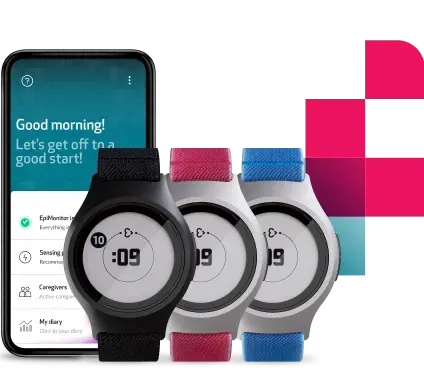
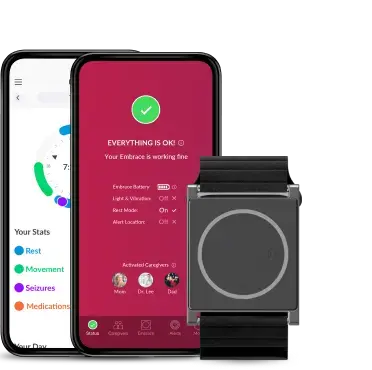
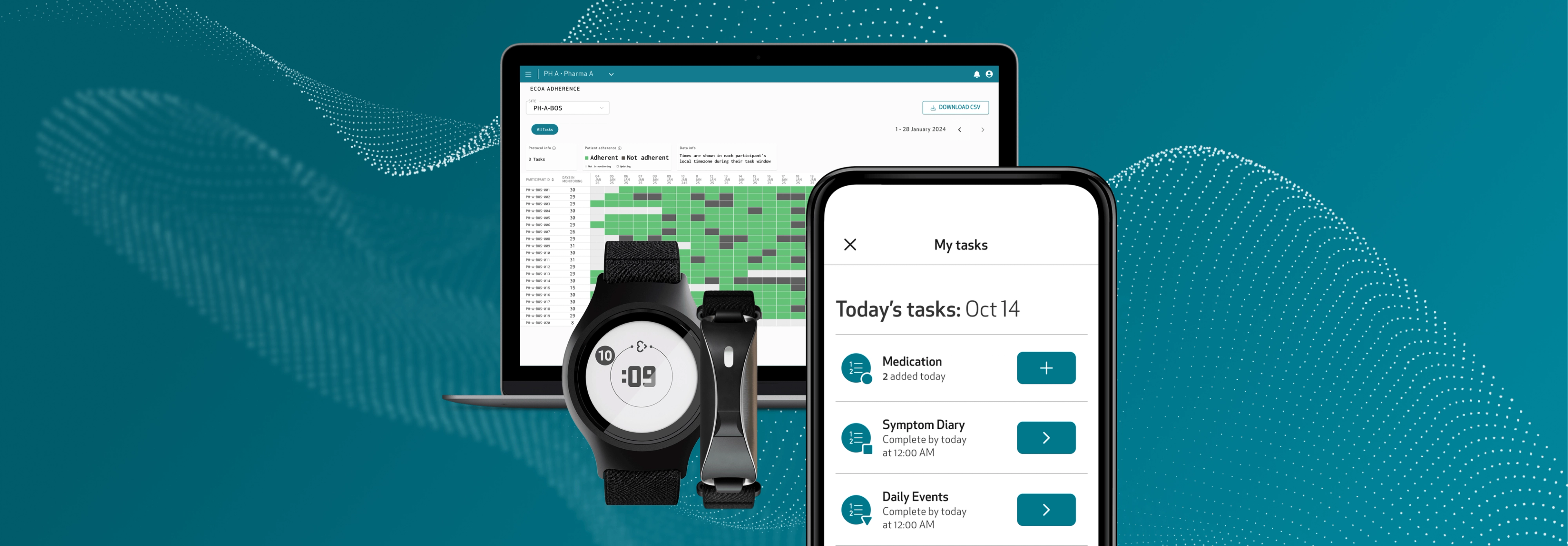
Platforms like Empatica Health Monitoring Platform operationalize this shift by integrating wearable data collection, eCOA, and real-time monitoring into a single ecosystem. Combined with medical-grade wearable devices such as EmbracePlus and EmbraceMini, sponsors can capture continuous physiological data outside the clinic with high reliability.
The value of pairing eCOA with digital endpoints
Whilst eCOA is valuable for capturing patient-reported experiences in real-world settings, responses may still be influenced by factors such as recall bias, differences in reporting frequency, and variability in how patients perceive or describe their symptoms. By pairing eCOA with continuous digital biomarker data, researchers can enrich patient-reported outcomes with objective context and longitudinal measurement.
For example, a patient may report poor sleep quality through eCOA, while wearable-derived metrics such as actigraphy and Wake After Sleep Onset (WASO) can objectively quantify disrupted sleep patterns over time. Together, these data streams provide a more complete picture by combining physiological measurement with patient-reported context, such as pain, anxiety, or external disturbances that may have contributed to the disruption. ePerfO assessments can further complement these insights by capturing the impact of symptoms on cognitive or physical functioning.
Within Empatica’s platform, these data streams are unified, enabling synchronized analysis across patient-reported outcomes and physiological signals.
Key benefits of combining eCOA with digital endpoints include:
- Contextualized insights: eCOA captures how the patient feels, while digital endpoints continuously measure physiological and behavioral changes.
- Improved endpoint sensitivity: Hybrid endpoints can better detect subtle changes in fluctuating conditions such as CNS disorders, sleep disorders, and chronic diseases.
- Enhanced patient engagement: Passive wearable monitoring reduces burden while eCOA captures targeted patient inputs, including structured ePerfO assessments completed at key timepoints.
- Better operational efficiency: Integrating eCOA and wearable data within a single platform streamlines workflows, improves data synchronization, and supports scalable remote monitoring across global trials.
Use cases across therapeutic areas
Sleep and neurology
Actigraphy-based sleep measurement combined with eCOA sleep diaries provides both objective and perceived sleep quality metrics, including WASO and sleep efficiency. ePerfO assessments, for example, can additionally help evaluate the impact of sleep disruption on attention, reaction time, and cognitive performance.
Mental health
Continuous physiological monitoring (e.g., heart rate variability) paired with patient-reported mood assessments enables more accurate tracking of treatment response.
Movement disorders
Digital gait and mobility metrics combined with symptom reporting enhance endpoint precision in conditions like Parkinson’s disease or multiple sclerosis. ePerfO tasks can further support evaluation of motor coordination, dexterity, and functional performance.
Decentralized clinical trials represent a fundamental shift toward more patient-centric research. But the real value lies not just in decentralization; it lies in integration. Pairing eCOA with digital endpoints bridges the gap between subjective experience and objective measurement. The result is richer, more reliable data, improved patient engagement, and ultimately, better clinical insights. As the industry continues to adopt digital health technologies, this combined approach will become a standard for generating high-quality evidence in modern clinical research.