


The INTREPIBD Study


Co-authored with Diego Hidalgo-Mazzei, MD, PhD, from the Bipolar and Depressive Disorders Unit, Hospital Clínic de Barcelona / IDIBAPS / CIBERSAM
Executive Summary
- Study approach: The INTREPIBD project, led by the Bipolar and Depressive Disorders Unit at Hospital Clínic de Barcelona, deploys the Empatica EmbracePlus wearable in naturalistic, real-world settings to continuously capture physiological biomarkers (EDA, skin temperature, heart rate, heart rate variability, and actigraphy) alongside clinical assessments of mood state across two complementary cohorts.
- Translational relevance: Bipolar disorder affects millions worldwide and carries one of the highest burdens of any psychiatric condition, yet diagnosis and treatment monitoring still rely almost entirely on subjective clinical interviews and self-report scales. Wearable technology that enables passive, continuous, real-world data collection offers a transformative opportunity to develop objective digital biomarkers that reflect mood states, episode transitions, and treatment response.
- Early insights: EDA is reduced during bipolar depressive episodes and increases following remission from both depressive and manic states; skin temperature is elevated by approximately 0.8°C during waking hours in manic episodes, an elevation that resolves with remission; detectable HRV changes accompany symptom resolution; and deep learning models can infer individual depression and mania severity scores from wearable signals alone.
- Impact: Integrating continuous wearable physiological data with structured clinical assessments enables the identification of objective, state-dependent biomarkers of mood episodes, treatment response, and disease trajectory. These biomarkers complement traditional subjective assessments, creating a scalable framework for generating real-world endpoints in neuropsychiatric drug development and personalized psychiatric care.
Bipolar disorder (BD) is a severe, recurrent mood disorder characterized by alternating episodes of elevated mood and energy (mania or hypomania) and depression, separated by periods of relative stability known as euthymia (World Health Organisation, 2025; National Institute of Mental Health, 2024). According to the Global Burden of Disease study, BD affects an estimated 40–60 million people worldwide and ranks among the leading causes of disability-adjusted life years in the 15–44 age group (GBD 2019 Mental Disorders Collaborators, 2022; Vos et al., 2020).
The consequences of BD extend well beyond mood. People living with the condition have a life expectancy that is 10–20 years shorter than average, partly due to high rates of physical health problems, substance use, and suicide; around 25–50% of patients attempt suicide at least once in their lifetime (Merikangas et al., 2011; Dome et al., 2019). The financial burden is also significant: direct mental healthcare costs alone have been estimated at $4,000–5,000 per person per year, with wider societal costs much higher when lost productivity is factored in (Kleine-Budde et al., 2014).
The neurobiological basis of BD involves dysregulation of the autonomic nervous system (ANS), circadian rhythm disruption, and aberrant neuroinflammatory and neuroendocrine signalling. These disruptions manifest as measurable changes in peripheral physiology, including alterations in electrodermal activity, skin temperature, heart rate variability, and activity patterns, during different mood states (McCarthy et al., 2022; Vaquerizo-Serrano et al., 2021). This creates a compelling scientific rationale for continuously and objectively capturing these signals using wearable sensors.
Despite this biological grounding, the clinical management of BD remains predominantly subjective. Diagnosis, episode classification, and treatment response assessment all rely on periodic structured interviews, clinician-administered rating scales such as the Hamilton Depression Rating Scale (HDRS) and Young Mania Rating Scale (YMRS), and patient self-report. These tools are valuable, but they only capture a snapshot and are vulnerable to recall bias, meaning that mood transitions and treatment effects that unfold between appointments are routinely missed (Scott et al., 2017). Thus, the criteria for prescribing medications in BD are still primarily dictated by a trial-and-error approach, resulting in roughly 40% of individuals having the expected response. During these uncertain and lengthy periods, adverse outcomes are frequent (i.e., side effects, relapses, suicide attempts). (INTREPIBD Group).
This measurement gap carries direct implications for pharmaceutical development. Clinical trials in BD have historically struggled with high placebo response rates, heterogeneous patient populations, and outcome measures that fail to capture the real-world, moment-to-moment fluctuation of symptoms (Grunze et al., 2015; Goodwin et al., 2016). Regulatory agencies, including the FDA and EMA, have increasingly signalled support for digital biomarkers as trial endpoints, a shift that passive wearable monitoring is uniquely positioned to support (FDA, 2021; Marquand et al., 2020). By deploying wearable technology to capture these signals continuously in patients’ everyday environments, clinicians and patients can begin to detect acute episodes earlier and determine treatment response.
The INTREPIBD research program
The INTREPIBD project is led by the Bipolar and Depressive Disorders Unit at Hospital Clínic de Barcelona, embedded within the Institut d’Investigacions Biomèdiques August Pi i Sunyer (IDIBAPS) and part of the Centro de Investigación Biomédica en Red de Salud Mental (CIBERSAM). The Unit, led by Professor Eduard Vieta and Dr. Diego Hidalgo-Mazzei, bridges clinical psychiatry and translational research with a strong focus on precision psychiatry and digital health approaches to mood disorders.
The interdisciplinary project team brings together psychiatrists, clinicians, and computer scientists to tackle the challenges of machine learning for mental healthcare. The core team is composed of highly specialized clinical psychiatrists, psychologists, and a full-time pre-doctoral biologist (Clàudia Valenzuela-Pascual), all with hands-on experience in recruiting and assessing patients with mood disorders during acute episodes, follow-up, and data analyses. This clinical expertise is complemented by close collaborations with data scientists at the School of Informatics, University of Edinburgh (Filippo Corponi, Bryan Li, and Antonio Vergari), as well as partners at King´s College London, Radboud University, and James Cook University, a collaboration designed to address the full pipeline from biological signal to clinical insight.
As Dr. Hidalgo-Mazzei explains, the move toward wearable technology was driven by the limitations of earlier approaches: earlier smartphone-based methods encountered technical complexity, low patient engagement with active data entry, and compliance issues that created systematic gaps in longitudinal data. The shift to passive wearable sensing addressed these challenges directly.
"We realized that relying on active patient input introduced significant compliance issues and data gaps. This led us to think about a more implementation-based approach: capturing passive data through wearable devices that require minimal patient effort beyond simply wearing them."
The study operates across two cohorts. The INTREPIBD-TIMEBASE cohort includes adult patients with mood disorders (bipolar disorder, major depressive disorder, and adjustment disorders) recruited from various clinical settings, including inpatient, home-treatment, and outpatient services. Patients experiencing acute episodes (depression or mania) are evaluated up to three times until remission; patients in euthymia and healthy controls are evaluated once. To date, the project has recruited over 360 participants with more than 600 recorded sessions. The second cohort, DIREKT, focuses specifically on patients with treatment-resistant depression receiving intranasal esketamine, assessed at baseline, after the 1st, 8th, and 12th administrations, and one month post-treatment.
All wearable recordings are conducted over 48-hour periods in naturalistic settings, with participants wearing the device while going about their normal daily routines without any modification to their environment. This approach enables the capture of physiological dynamics as they unfold in real life, rather than under controlled and potentially unrepresentative laboratory conditions.

Study design and biomarker framework
Dr. Hidalgo-Mazzei explains: “Our mission with INTREPIBD is twofold:
- To identify specific physiological patterns based on digital biomarkers that can objectively characterize mood episodes and differentiate clinical states (depression, mania/hypomania, euthymia) from healthy controls
- To determine objective digital signatures of treatment response and predict outcomes through exploratory analyses and innovative modelling of multi-modal data powered by machine learning.”
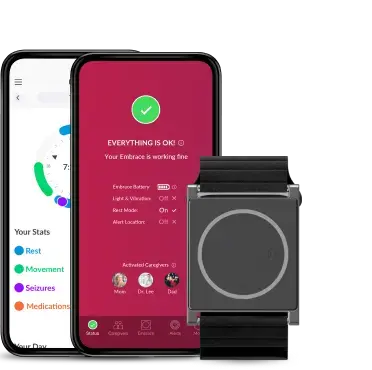
The study utilizes the Empatica EmbracePlus wearable to collect multimodal, continuous physiological data, with a focus on autonomic nervous system markers. The device captures:
- Electrodermal activity (EDA)
- Skin temperature
- Heart rate (HR) and heart rate variability (HRV) via photoplethysmography
- Three-axis accelerometry for actigraphy
These signals serve as proxies for sympathetic and parasympathetic balance, circadian rhythm integrity, and motor activity patterns across different mood states. The team employed several sophisticated analytical models for the analysis, including statistical modeling, advanced probability analysis, and machine learning approaches.
"Wearable technology allows us to collect continuous, objective physiological data in patients' everyday environments, something that clinic-based assessments or smartphone apps cannot reliably achieve. This is especially important for detecting subtle autonomic and circadian changes that accompany mood transitions and treatment response in bipolar disorder."
Dr. Diego Hidalgo-Mazzei, Principal Investigator, INTREPIBD
The value of Empatica’s technology in a psychiatric research population
Ensuring consistent, high-quality data collection in psychiatric research populations presents particular challenges. The INTREPIBD team’s earlier experience with smartphone-based approaches underscored this problem: low engagement with mood diaries and active self-assessment created data gaps that undermined longitudinal analyses. The transition to passive, wearable sensing addressed this directly by removing the need for active participation beyond wearing the device.
The Empatica E4 was selected for “its research-grade EDA sensor, one of the very few available in a wrist-worn form factor” alongside its “validated multi-signal architecture and widespread adoption in the academic research community”. When the E4 was discontinued, the team transitioned to the EmbracePlus, conducting a dedicated validation study to harmonize data structures and ensure continuity of the longitudinal dataset.
The EmbracePlus introduced important new capabilities that directly advance the research: a longer battery life enabling continuous recording without requiring device removal, and on/off detection with preprocessed data download options. These features are directly relevant to the team’s future study designs, which aim to extend recording windows to capture longer-term physiological dynamics, including the trajectory of mood episode onset and resolution over days and weeks, rather than the current 48-hour snapshot.
Continuous wearable monitoring addresses a longstanding gap in trials and clinical care where reliance on episodic visits and subjective scales leaves treatment response poorly characterized. For drug development, this means more sensitive endpoints, more timely measurement of treatment response, and richer data to support regulatory submissions; for clinical practice, it opens the door to real-time monitoring of patient well-being and personalized treatment strategies.
As Dr. Hidalgo-Mazzei highlights: “As wearable technology continues to improve in terms of battery life, sensor quality, and data accessibility, we believe it will become an integral part of routine psychiatric care, providing both clinicians and patients with the objective parameters needed to make timely, informed treatment decisions.”
"EmbracePlus' wristband form factor, similar to a smartwatch, made the device socially acceptable and unobtrusive, which was particularly important for patients during acute psychiatric episodes who may already feel vulnerable or stigmatized."
Dr. Diego Hidalgo-Mazzei, Principal Investigator, INTREPIBD
Key findings from the research
Electrodermal activity as a marker of depressive state and treatment response
One of the programme’s central findings is that EDA is systematically reduced during bipolar depressive episodes compared to both euthymia and healthy controls, and increases following remission from depressive as well as manic episodes. This suggests EDA may serve as an objective marker for early detection of depressive symptoms and for tracking treatment response over time.
Skin temperature as a state-dependent signature of mania
The team found that patients experiencing manic episodes have a state-dependent increase in daytime skin temperature of approximately 0.8°C compared with euthymic patients and healthy controls. Importantly, this elevation returns to normal once the manic episode resolves, confirming that it is linked to the mood state rather than being a permanent trait.
"It was a moment where the data gave us something we could not have seen with clinical scales alone, an objective physiological signature that tracked with the clinical state in real time."
This finding, published in the Journal of Affective Disorders in 2025, received widespread media attention (including coverage by TV3, La Vanguardia, Le Monde, and Medscape) and illustrates the potential of a simple, passively recorded physiological signal to provide clinically meaningful information that complements traditional subjective assessments. The specificity of the temperature signal, present in mania, absent in depression and euthymia, also raises the possibility of using wearable-derived biomarkers not only to detect episode onset but to differentiate between episode types, a clinically critical distinction that currently requires a detailed clinical interview.
Episode detection and symptom inference
Bayesian analyses of HRV data, the natural variation in time between heartbeats, reflecting nervous system balance, revealed detectable HRV changes during symptom resolution over acute episodes. Furthermore, deep learning models demonstrated the feasibility of inferring individual depression and mania severity item scores from wearable signals alone, and their self-supervised learning approach showed that models pre-trained on diverse wearable datasets can successfully identify mood episodes.
The team emphasizes that all findings to date are preliminary and require replication in larger, more diverse populations. Active efforts to expand the study network nationally and internationally are underway to provide the validation across different clinical settings, cultural contexts, and patient populations needed before any translation into clinical practice.
Looking ahead
The INTREPIBD study network has already expanded to three additional national centres in Spain (i.e., Hospital Universitario Basurto (Bilbao), Institut Pere Mata (Tarragona), and the University of Cádiz) as well as one international site at the University of Parma in Italy, with the University of Chile expected to join soon.
“We aim to keep expanding this network to build the most extensive collection of passive wearable data in mood disorders worldwide through international collaboration. We have already published 9 research papers from the INTREPIBD project, including publications in journals such as the Journal of Affective Disorders, npj Mental Health Research, and Nature Translational Psychiatry (full list on website). We also have several additional manuscripts in preparation from both the INTREPIBD-TIMEBASE and DIREKT cohorts.”
On the analytical side, the team plans to move from a categorical diagnostic approach (comparing disorder A vs disorder B) to a dimensional, transdiagnostic approach, examining the symptomatic dimensions of the diseases rather than the diagnostic categories themselves. This will allow the team to identify personalized physiological patterns across different disorders by incorporating unipolar depressive and adjustment disorders into the sample, which often precede or overlap with bipolar disorder.
With the EmbracePlus enabling extended recording periods through recharging, future study protocols will be designed to capture longer-term physiological dynamics, including the weeks-long trajectory of episode onset and remission. As the team reflects on the broader trajectory of the field:
"Wearable data has the potential to transform psychiatry from a field reliant on periodic subjective assessment to one informed by continuous, objective physiological monitoring, enabling earlier detection of episode onset, more precise measurement of treatment response, and ultimately personalized treatment strategies."
The DIREKT project, which focused on digital predictors of esketamine response in treatment-resistant depression, remains the team’s flagship ongoing study and represents the first attempt to use wearable data to predict response to a novel rapid-acting antidepressant in a real-world clinical setting.
For researchers and pharmaceutical partners considering this approach, the team’s experience offers a clear set of guiding principles: invest early in robust preprocessing pipelines; build interdisciplinary teams from the outset; and prioritize device comfort and minimal burden in populations experiencing significant health challenges.