

ONCOLOGY
Objective monitoring of patient stress in breast cancer radiotherapy with EmbracePlus
The PEXRT Study


Executive Summary
Study approach:
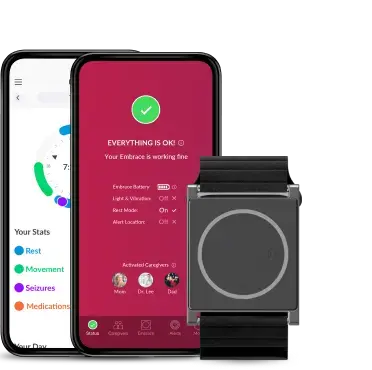
The PEXRT study integrates the FDA-cleared, CE-marked EmbracePlus wearable into routine radiotherapy workflows to continuously monitor physiological stress biomarkers (EDA, pulse rate variability, pulse rate, and skin temperature) alongside patient-reported assessments.Translational relevance:
Stress during breast cancer treatment is common and may influence overall outcomes, yet objective real-world stress measurement remains limited in clinical practice.Early insights:
The device has been successfully embedded into clinical workflows, demonstrating high usability, strong compliance, and reliable data capture.Impact:
Objective physiological stress biomarkers can complement Patient Reported Outcomes (PROs) in oncology trials, enabling continuous measurement during high-impact treatment moments that are currently unobservable.
Breast cancer is the most commonly diagnosed cancer worldwide and is a leading cause of death in women (National Cancer Institute, n.d.). The disease is characterized by the abnormal growth of cells in breast tissue, resulting in the formation of a tumour (World Health Organisation, 2025). Despite increased awareness efforts, many individuals with breast cancer still go unrecognized or undiagnosed in the early stages, often due to limited access to screening or subtle, overlooked symptoms.
Breast cancer mortality rates in the European Union have declined by 30% since 1990, reflecting major advances in prevention, early detection, and treatment (Santucci et al., 2025). Current treatment options typically include surgery to remove the tumour, medications to destroy cancer cells and prevent spread, and radiation therapy delivered using specialized machines called “linear accelerators (LINACs)” to reduce the risk of recurrence in the breast and surrounding tissue (Ben-Dror et al., 2022).
A downward spiral: the link between cancer and stress
Alongside physical and lifestyle impacts, the disease and its treatment impose a significant psychological burden on patients, who commonly experience elevated levels of stress, anxiety, and depression throughout diagnosis and care (Borgi et al., 2020; Antoni et al., 2009). This is particularly relevant for women, who tend to be more vulnerable to anxiety and depressive symptoms when exposed to sustained or intense stress (Borgi et al., 2020).
Stress-related biological pathways are involved not only in psychological responses but also in breast cancer progression (Borgi et al., 2020). Cortisol plays a central role in the body’s stress response, with prolonged elevation reflecting ongoing or chronic stress (Knezevic et al., 2023). Sustained elevations in stress hormones such as cortisol may impair immune surveillance, reducing the ability of the immune system to detect and eliminate tumour cells, while also contributing to tumour-supportive changes within the tumour microenvironment (Liu et al., 2022). Together, these mechanisms suggest that sustained stress responses may have meaningful implications for treatment effectiveness and overall patient outcomes in breast cancer care.
Effectively managing stress alongside cancer therapy, therefore, has therapeutic value: interventions such as psychosocial support and structured stress management have been associated with reduced stress hormones and improved psychological wellbeing in people with cancer, and reducing stress could help support better treatment responses (National Cancer Institute, 2022). Studies demonstrate that psychosocial support is associated with reduced cortisol levels in people with breast cancer (Mészáros Crow et al., 2023). International guidelines, such as those from the International Psycho-Oncology Society (IPOS), argue that psychosocial care is a universal human right and that emotional distress should be measured as the "sixth vital sign" (after temperature, blood pressure, pulse, respiration, and pain) (Luigi Grassi, 2020; GGPO, S3-Leitlinie Psycho-onkologie, 2023). However, objective methods for proactively measuring stress responses and prediction in real-world settings remain limited or non-existent, and further research is needed to identify which aspects of treatment contribute most to stress and how these effects differ among individuals.
A novel solution to an age-old problem
The confined, high-anxiety environments of CT scanners and LINACs present significant challenges for traditional stress assessment methods, as patients cannot communicate or complete questionnaires during these procedures. This is where medical-grade wearable technology can add value, enabling continuous, objective measurement of stress responses without interrupting care or adding burden for patients. The resulting data could provide a more complete picture of how stress fluctuates during treatment and everyday life and support more personalized interventions to improve patient outcomes. Since clinical guidelines still rely on patient-reported measures only, this project aims to study the feasibility of the wearable technology integration in the clinical setting.
The PEXRT Study
Empatica’s EmbracePlus wearable was selected for the PEXRT study, a collaborative project involving the Zentrum für Strahlentherapie (STZ) Freiburg, the Intelligent Embedded Systems Lab at the University of Freiburg, and Hahn-Schickard. The project has received support from The Mertelsmann Foundation for funding the Empatica EmbracePlus smartwatches, and the technical expertise for wearable interaction with CT-Planning and LINAC Radiotherapy systems from Siemens Healthineers and Varian – a Siemens Healthineers company. The study (PEXRT), led by Dr. Christian Weissenberger and Carsten Witte, from the clinical side, and Isabel Nieto Alvarez, with Prof. Oliver Amft from the technical side, aims to both qualitatively and quantitatively assess stress and affective states in breast cancer patients at key points throughout their radiotherapy treatment.


The study is currently underway, with EmbracePlus used to continuously monitor four physiological biomarkers associated with stress and autonomic regulation: electrodermal activity (EDA), pulse rate variability (PRV), pulse rate, and skin temperature. The research team has already collected data from 34 out of the target 50 female patients diagnosed with breast cancer, aged 18 years and older. Physiological data during routine clinical procedures, including imaging in a CT scanner and radiotherapy sessions delivered using a LINAC is being collected. Monitoring is conducted in a standard clinical environment alongside usual care, allowing stress responses to be captured unobtrusively during real-world treatment conditions.
Nieto Alvarez said, “We were most interested in identifying acute moments and longitudinal trends of elevated stress throughout patients’ radiotherapy treatment. Specifically, our aim is to correlate physiological stress responses with key clinical events and contextual factors such as patient-staff interactions, specific treatment procedures, and exposure to medical technology within the radiotherapy environment.”
The study employs multiple complementary analytical approaches to analyze the data, utilizing machine learning techniques to classify and predict stress states from the multimodal physiological signals. The objectively measured physiological stress response was compared with patients’ self-reported assessments, allowing the team to examine how subjective experiences aligned with biomarker data and to place self-reported outcomes within a broader physiological context.
Early insights from the study experience
Since data collection has already begun, we asked the PEXRT team if any preliminary findings could be shared. “We have successfully integrated the Empatica EmbracePlus into our clinical workflow, running it in parallel with the self-reported patient questionnaires used to measure distress throughout radiotherapy treatment. The device is currently functioning well and is allowing us to collect usable, high-quality data that supports our ongoing evaluation. Patients wear the device during six independent, non-consecutive radio-therapy sessions spanning their treatment course, allowing us to capture physiological stress responses at key treatment milestones. To date, we have collected data from 34 of our target 50 patients. The data collection process has proven reliable to this day and is being conducted by a psycho-oncologist with support from a research assistant.”
Why Empatica’s technology stands out: medical-grade credibility with patient-first design
Nieto Alvarez explained that the team chose the EmbracePlus over other alternatives due to its “comprehensive medical-grade certifications, including: FDA 510(k) clearance, CE Mark certification according to EU Medical Device Regulation 2017/745 as a Class IIa medical device, and ISO 13485:2016 quality management system compliance. Additionally, the device captures all physiological biomarkers essential for our stress monitoring research in a single, validated platform.”
"The EmbracePlus demonstrated excellent usability that supported strong participant retention."
Isabel Nieto Alvarez, PEXRT Co-Lead
Beyond meeting the researchers’ technical and regulatory requirements, patients described the wrist-worn device as “comfortable and unobtrusive during radiotherapy sessions, supporting high compliance throughout the study”. This is particularly important not only for stress research, but also in highlighting the potential of wearable technologies to be integrated into oncology care without adding to the already significant burden experienced by patients, while preserving the accuracy and reliability of the data collected. Together, these findings underscore the value of patient-centered design alongside clinical-grade performance when deploying digital health technologies in demanding clinical environments.
The promise of digital health technology
Digital health technologies offer new opportunities to improve breast cancer outcomes by enabling continuous, real-world data collection that complements traditional clinical assessments. The PEXRT team highlights that ongoing innovation in smaller and less obtrusive wearables enables more naturalistic data capture in everyday life.
However, the team stresses that innovation must align with real-world care settings and that technology only delivers meaningful impact when it is effectively embedded into clinical workflows. “This shift will ultimately improve the ecological validity of stress research and facilitate long-term continuous monitoring studies”, ultimately helping to address persistent data gaps in women’s health.
As remote monitoring solutions continue to evolve, they have the potential to reshape how breast cancer research understands patient experience beyond the clinic. When thoughtfully integrated into care, these technologies can help ensure that patients and clinical teams receive the support and insights needed to improve outcomes.