


Music can be such a comfort, especially when emotions run high. Remember being 14, massively moody, and your only salvation was lying on your bed, with the speakers turned up, completely entranced in a song that had been on repeat for the last hour? What a sweet sensation it was. A remedy.
The benefits of music aren’t just a teenage claim. Music has been used as a therapy for many medical conditions including dementia, autism, and depression¹. We know that it’s very effective in neurological stimulation².
Renowned neurologist and author, Oliver Sacks, wrote about the power of music on the brain in his book, Musicophilia. Dr. Sacks believed that “musical perception, musical sensibility, musical emotion and musical memory can survive long after other forms of memory have disappeared”, and so can aid people with dementia and Parkinson’s disease³. One of the stories in the book is about man with Alzheimer’s who couldn’t remember what he did for a living or even what he did 10 minutes ago, however he could “remember the baritone part of almost every song he has every sung”⁴.
Another account featured in the book is that of composer Tobias Picker, who has Tourette’s. Concentrating on composing helps him control his condition to where he feels like it completely leaves him while performing.
Could music also be used to decrease seizure frequency?
Some studies seem to suggest so. In October 2011, a study at the Thad E. Saleeby Center in Hartsville, South Carolina investigated the ability to reduce or prevent seizures by listening to music at night. The study lasted for three years. In the first year, seizure rates were established, and in the third year the music therapy ended. Study participants exposed to the therapy had a 24% decrease in seizures, during the treatment phase, and a 33% decrease in the follow-up phase. Twenty-four percent of the participants had no seizures at all during the treatment⁵.
Another study suggests that listening to Mozart may be associated with a decrease in seizure frequency in children. Eleven children were enrolled in the study, from the ages of 6 to 11. They listened to Mozart K.448 once a day before bedtime for 6 months. The frequency of their seizures was noted 6 months before they started the study, and then once a month during the study, which lasted 6 months. Eight out of 11 patients were seizure-free after the study period. The remaining 3 didn’t show any effect⁶. In an unrelated case, a 56-year old patient with epilepsy listened to Mozart’s music for 45 minutes daily for 3 months. During those months, he didn’t experience any generalized tonic-clonic seizures⁷.
More investigation needs to be carried out to see whether other songs are destined to such dignity. Wouldn’t it be nice if some of your greatest guilty pleasures could actually help you control your epilepsy? You wouldn’t have to blush when you’re caught singing along to Aqua or Journey, or whatever your secret indulgence may be.
Before your submerge yourself in music…
It’s important to know that not all lemons are primed for lemonade. Some are just lousy lemons. By this, we mean that for some people, certain songs or melodies may actually induce seizures. Musicogenic epilepsy is when seizures are triggered by specific types of music, which can differ based on the individual⁸. The condition is quite rare, thought to affect only one in 10,000,000 people⁹. Nevertheless, it reminds us that we’re all made up of different complex layers, and it’s up to ourselves to peel them apart and discover what’s right for us.
Your health, however, is a high stakes operation, so we recommend always consulting with your doctor before you undergo any new treatment or modify your current one.
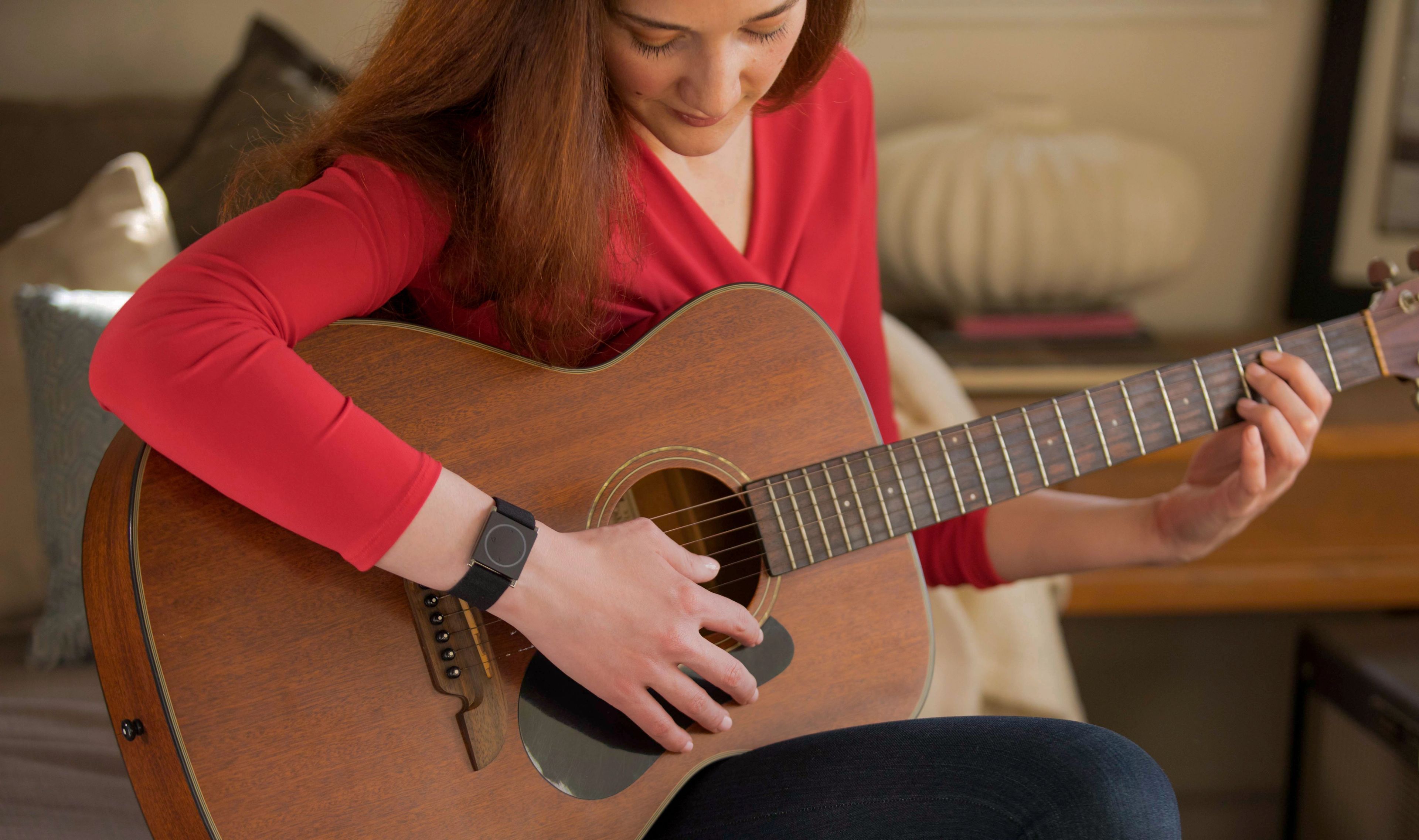
We, here at Empatica, love music. For many of us, it’s just a pleasant background that keeps us company as we move along the journey of life. We hope that for some it’s able to do much more. More than getting energized before a run. More than cradling us when we’re sad. We’ll continue to keep an ear out on its likelihood to serve as a soundtrack for healing, and we encourage you to do the same.
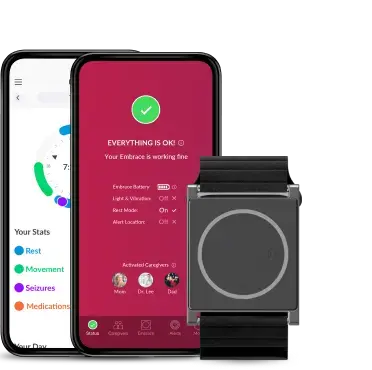
We’re devoted to creating products that make positive impacts peoples’ lives. See how Embrace2 is providing peace of mind to people with epilepsy here: Stories
Embrace2 is an FDA-cleared medical device in the U.S., to learn more about how we achieved this milestone, we recommend reading: Embrace is Now an FDA-cleared Medical Device!
To discover more about Embrace2, check out our dedicated blog post: Everything you need to know about Embrace2
In the meantime, we invite you to share your favorite guilty pleasure song on your social media account using the hashtag #guiltypleasuresong. After all, if you like something, own it!
Words worth reading
Sources
³ Kakutani, M (2007). Power to Soothe the Savage Breast and Animate the Hemispheres
⁴ Kulman, L. (2007). Oliver Sacks Observes the Mind Through Music.
⁷ Lahiri, N. (2007). The Mozart effect: encore.
⁸ Stern, J. (2015). Musicogenic epilepsy.